
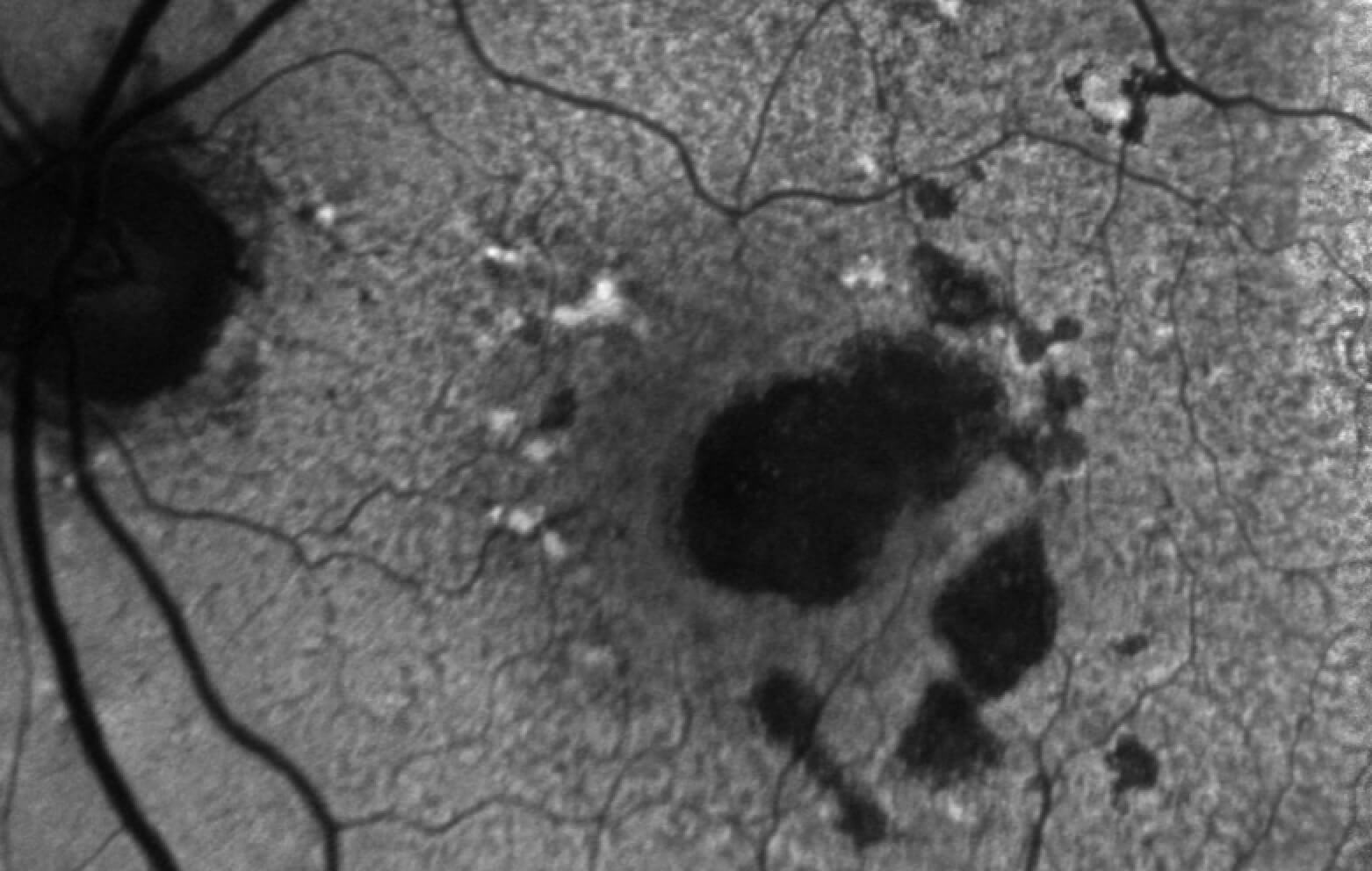
Geographic Atrophy (GA)

Geographic Atrophy

Geographic atrophy (GA) is a devastating disease, driven by the loss of photoreceptor cells in the retina. It is a chronic and progressive condition which greatly impacts the lives of millions of people living with GA. 

GA can lead to permanent vision loss, mostly affecting the central vision and  making it difficult to perform tasks requiring detailed vision. 

There is limited treatment options available however the the recently approved Syfovre (Pegcetacoplan) aims to reduce the growth of the lesion and to preserve vision. More trials are looking at different inhibiting different pathways and gene therapy  to stop the progression.

Currently Recruiting

  • This Phase 1/2 study is investigating use of a once off gene therapy treatment (SAR446597) to inhibit both complement and alternative pathways which are responsible for development of geographic atrophy.
  • Study Duration: 2 years (additional optional follow up for 3 years)
  • A Phase 1/2a study investigating TO-O-1007, administered via a one-time intravitreal dissolvable implant, in patients with geographic atrophy. It benefits patient by offering a treatment which reduces patient burden of frequent injections.
  • Study Duration: 28 weeks  
  • Observational study in patient with geographic atrophy secondary to aged-related macular degeneration
  • Part 1: 6 months Part 2: 18 months
  • A Phase 2 study investigating ADX-038, a complement factor B inhibitor administered subcutaneously every three months, in patients with geographic atrophy.
  • Study Duration: 2 years
  • Requirements: Must be vaccinated against meningococcal disease and streptococcus pneumoniae

Upcoming

  • A Phase 3 study investigating monthly subcutaneous injection of pozelimab plus cemdisiran, or cemdisiran alone, targeting systemic C5 inhibition in geographic atrophy.
  • Study Duration: 2 years + optional long term treatment period (3 yrs)
  • Requirements: Must be vaccinated against meningococcal disease and streptococcus pneumoniae
  • This is a phase 1/2, first in human study evaluating the safety and tolerability of AAV-14295 administered suprachoroidally in participants with geographic atrophy. The study aims to reduce patient burden with a single suprachoroidal injection, as current treatments are intravitreal injections administered monthly or bimonthly. 
  • Study Duration: 1 year

The Cureos Clinical Research Network provides research trials, site management and medical writing.